


Configuring a message throw intermediate event
A Message Throw Intermediate Event sends a message that can be correlated with a catch event—either a Message Catch Intermediate Event in a running process or a Message Start Event to initiate a new process instance. The event creates a connection between the sending and receiving components, allowing information or instructions to be transmitted. Once the message is thrown, the process continues its flow.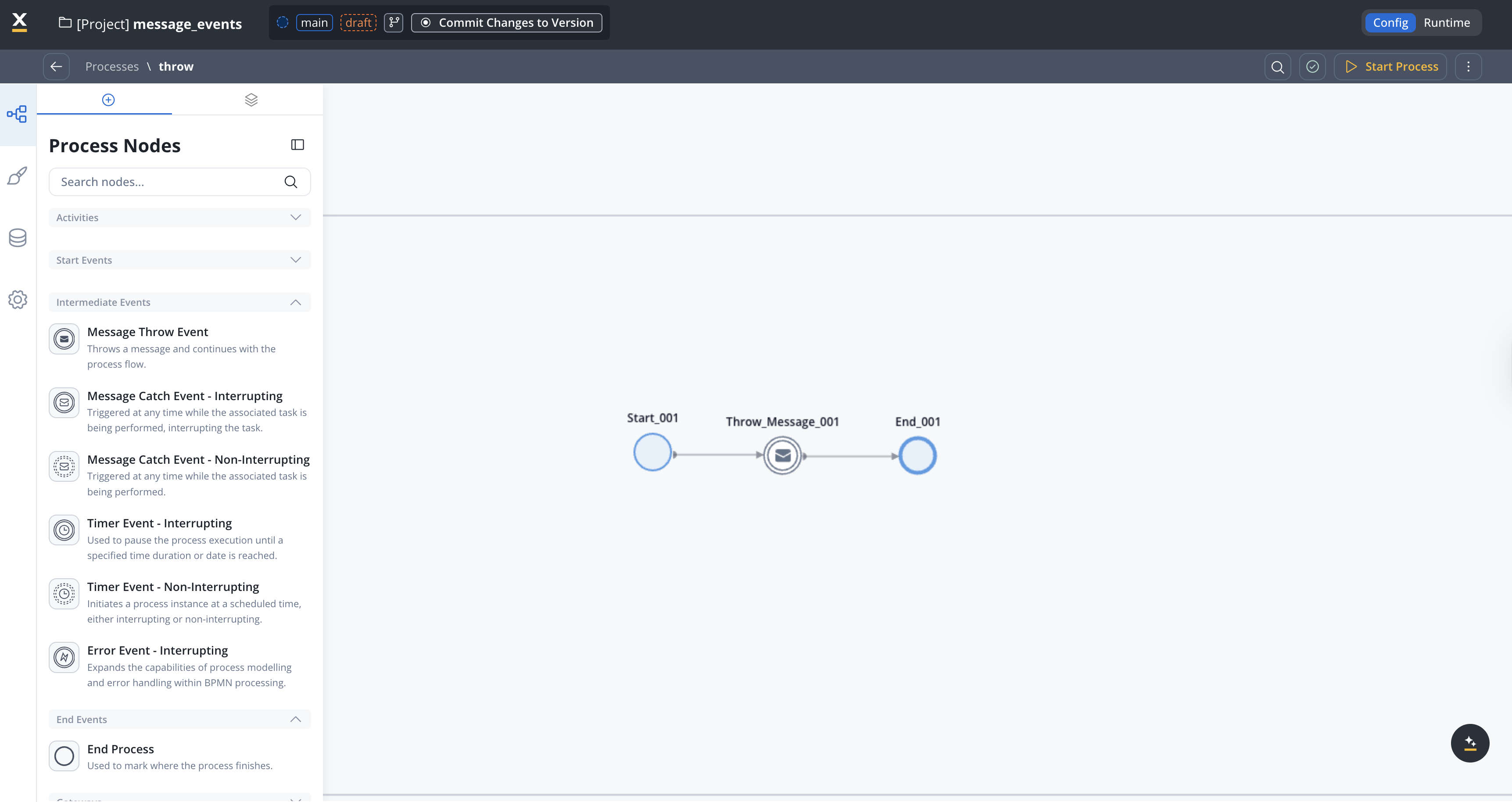
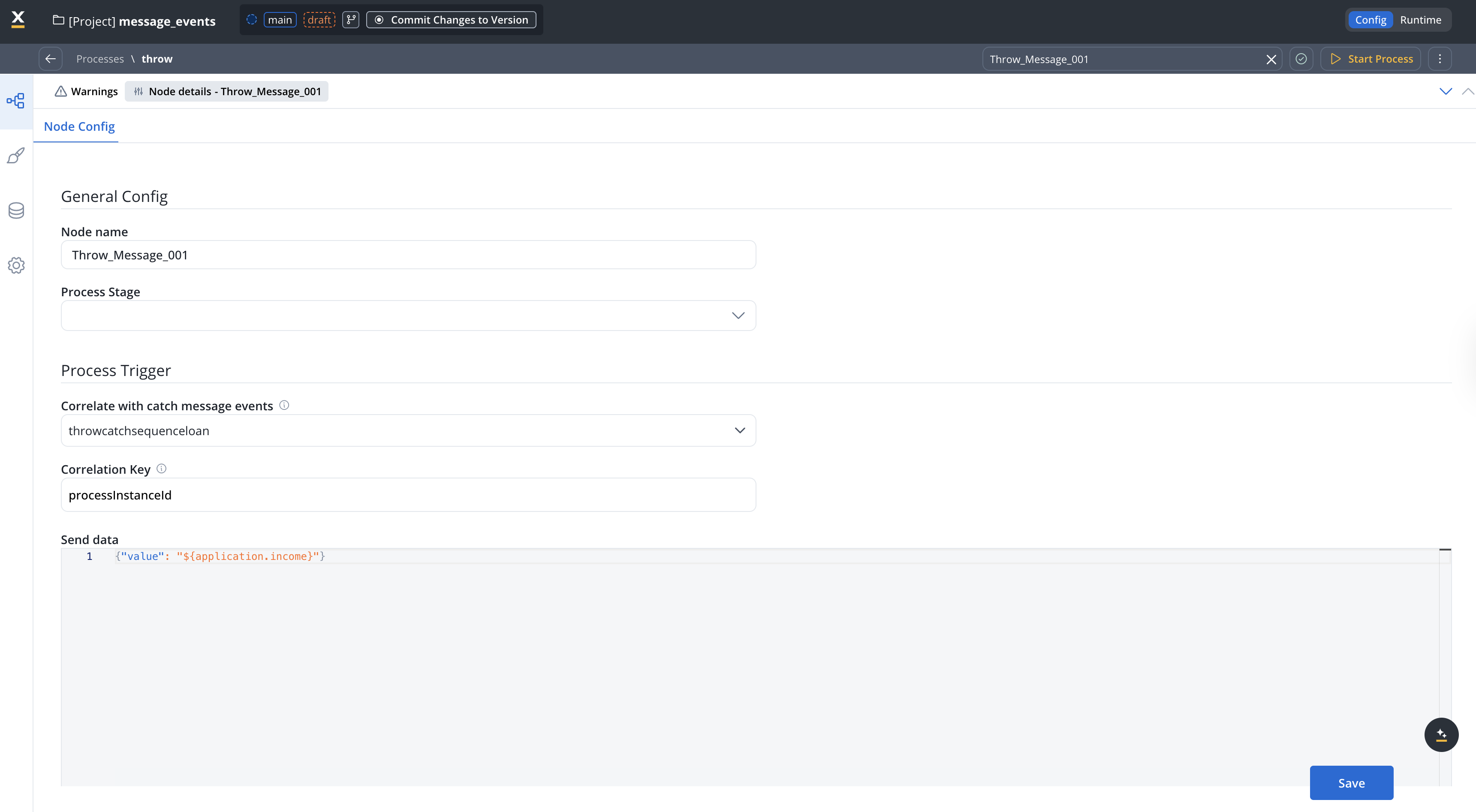
General config
Select the catch message event that this throw event should communicate with. The dropdown contains all catch messages from the process definitions accessible to the user.
It is imperative to define the message for the catch event first. This ensures its availability in the dropdown menu when configuring the throw intermediate event.
A process key that uniquely identifies the instance to which the message is sent. This key establishes a clear and distinct connection between the sender and recipient in the messaging process.Common correlation key examples:
A correlation key is used to match instances based on their shared value. It is not important what the attribute’s name is (even though we map based on this attribute), but rather the value itself when performing the matching between instances.
processInstanceId- to correlate with a specific process instanceparentProcessInstanceId- to correlate with a parent process when communicating from a subprocess- Custom business keys like
orderId,applicationId, etc.
Define a JSON structure with the data to be sent along with the message. You can use dynamic values from the process data using the
${} syntax.Example:Assign a stage to the node if needed. Stages help organize and track process progress.
Use cases
Correlating with a running process instance
Use the Message Throw Intermediate Event to send data to a Message Catch Intermediate Event that is waiting in another part of the same process or in a different running process instance.Both the throw and catch events must have matching:
- Correlation message name (selected in “Correlate with catch events” / “Correlate with throwing events”)
- Correlation key value at runtime